Needle-free glucose monitoring just had its best funding month in years, and the winning approach still isn’t clear

Needle-free glucose monitoring just had its best funding month in years, and the winning approach still isn’t clear

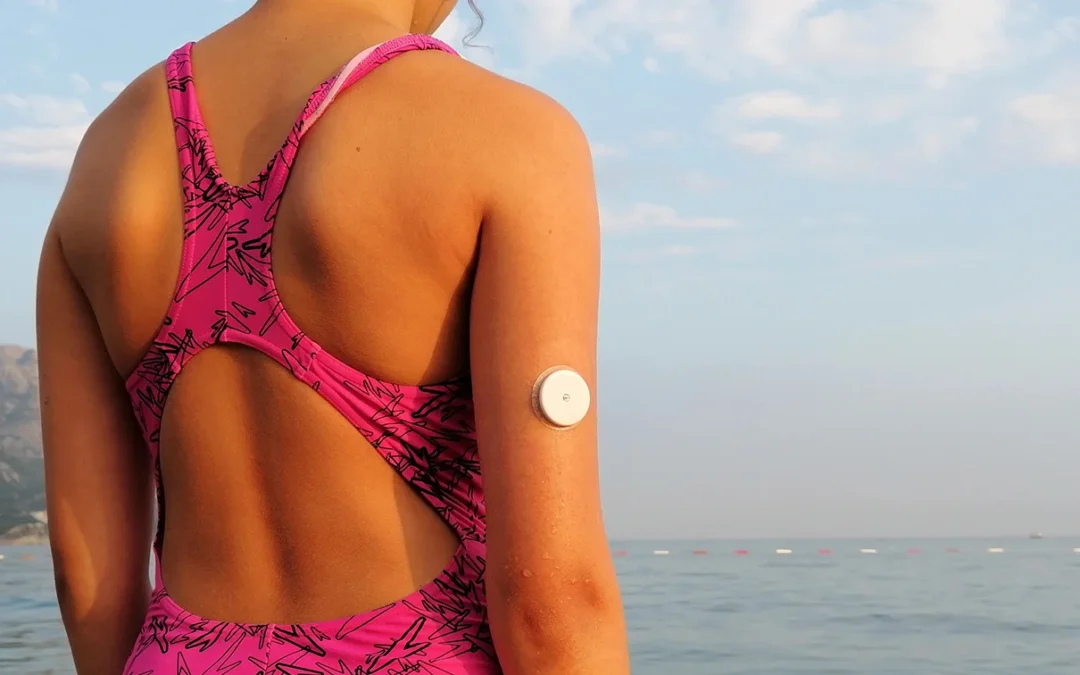
Biolinq raised $100M for a minimally invasive sensor. Nine other startups are racing toward a fully non-invasive one. No single technology has won yet.

Continuous glucose monitoring already works well enough to be a multi-billion-dollar category. The race happening underneath that success is about removing the last needle, and it's still wide open.

A crowded field, several very different approaches, no clear winner

Biolinq, a San Diego-based company developing a wearable biosensor that measures glucose just beneath the skin's surface without a traditional inserted sensor, secured a $100M round, according to Crunchbase News, the same month VitalConnect raised an equally sized round for wearable cardiac monitoring patches.

For the fully non-invasive category, a New Market Pitch comparison identifies nine credible competitors, Photonic View Technology, RSP Systems, Liom, HAGAR, Jingce Medical, BOYDSense, DiaMonTech, Bobang Fangzhou, and Afon Technology, using methods ranging from Raman spectroscopy to radiofrequency waves and breath analysis, deliberately excluding microneedle-based approaches like Biolinq's, since those still technically enter the skin.

Photonic View Technology's calibration-free study is the largest and most methodologically convincing in the non-invasive field so far, even though rival HAGAR reported a lower headline error rate, a reminder that the smallest number in a press release isn't always the most credible one.

Accuracy and manufacturability are pulling in different directions

Raman spectroscopy has emerged as the leading scientific approach among the top three non-invasive contenders, but the optics involved remain difficult to shrink and manufacture at consumer scale, according to the same comparison. That tension, the most scientifically promising method is also the hardest one to actually ship as a mass-market wearable, is the central unsolved problem in this entire category, and it's why incumbent players like Abbott's FreeStyle Libre, which still requires a subcutaneous sensor but eliminated fingerstick calibration, remain the practical standard nearly a decade after non-invasive alternatives first started being seriously funded.

Whether regulatory approval in China creates real-world pressure on Western developers

Watch whether Jingce Medical and Bobang Fangzhou's already-approved products in China, despite their accuracy limitations, create competitive pressure on Western developers to bring a workable, if imperfect, non-invasive product to market faster rather than continuing to chase a fully validated, clinical-grade solution. A supplementary tool that ships now may end up shaping consumer expectations well before a more accurate but slower-to-market competitor arrives.

Surgical robotics raised $1.17B in two years, and almost all of it went to companies solving one specific problem

Surgical robotics raised $1.17B in two years, and almost all of it went to companies solving one specific problem

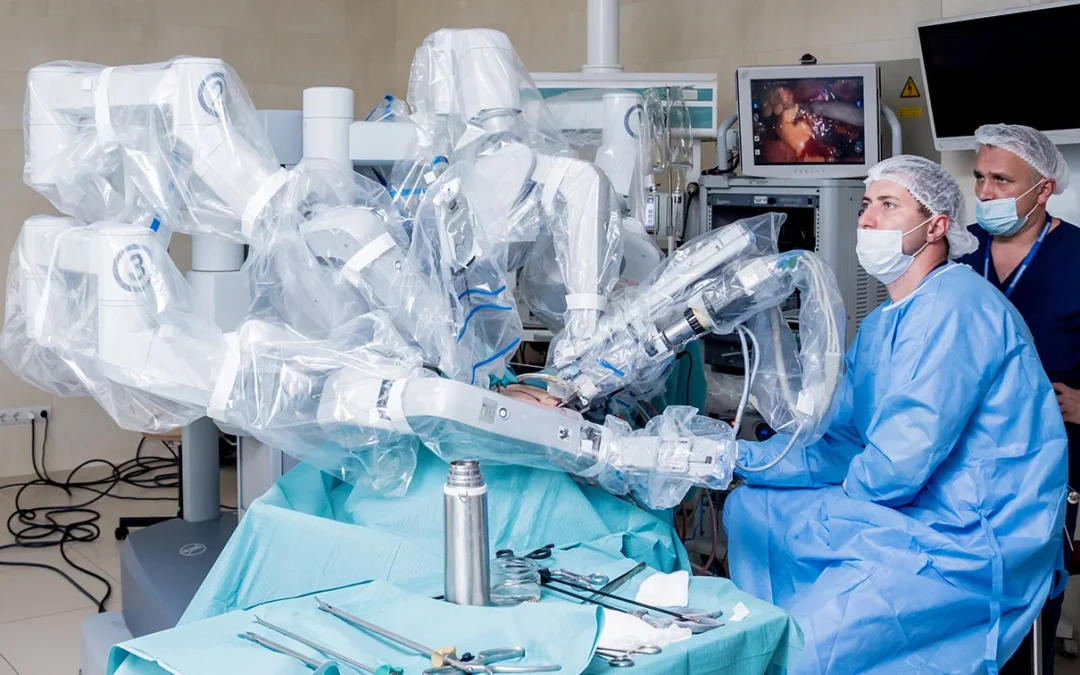
The deals getting funded aren't generic robotic platforms. They're systems targeting a defined procedure investors can actually measure adoption for.

Surgical robotics is a capital-intensive, infrequent-but-large-check category. The companies actually landing those checks share a specific trait that generic robotic platform pitches don't.

Concentrated capital, and a clear pattern in who gets it

Pure-play surgical robotics companies raised $1.17B across 17 disclosed deals between August 2024 and July 2026, according to New Market Pitch, averaging only 0.74 disclosed rounds per month, a genuinely infrequent deal cadence. But when rounds happen, they're large: median disclosed round size was $67.0M, and nine of the 17 deals were above $50M. The largest single deal represented 17.1% of all disclosed capital, the top 3 deals reached 40.7%, and the top 10 reached 88.6% concentration.

Distalmotion and XCath, two companies that raised meaningful capital in this window, share a common thread: both target defined procedural workflows where adoption can be measured directly, rather than pitching a general-purpose robotic platform searching for a use case.

Soft tissue surgery robots led the category by capital, a signal that investors are backing systems solving a specific, definable surgical problem rather than platforms marketed as broadly applicable across many procedure types.

"General purpose" is a harder sell than "this specific procedure, done better"

A surgical robotics platform pitched as broadly applicable across many procedures sounds impressive in a pitch deck, but it's genuinely difficult for a hospital's value analysis committee to evaluate, since there's no single, clean adoption metric to point to. A platform built for one defined procedure, gynecological surgery, kidney stone removal, a specific thoracic approach, gives a hospital a much clearer before-and-after comparison to justify the capital expense, and that clarity is exactly what's separating funded surgical robotics companies from unfunded ones in this data.

Whether narrow-procedure robots eventually expand, or stay deliberately narrow

Watch whether companies like Distalmotion and XCath use their initial procedure-specific foothold to expand into adjacent procedures once adoption is proven, following the path CMR Surgical's Versius system took after establishing itself in thoracic and gynecological surgery, or whether staying deliberately narrow turns out to be the more durable long-term strategy in a category where investors have clearly rewarded focus over breadth so far.

Interoperability could save US healthcare $77.8B a year, and the technology to do it has been live for months

Interoperability could save US healthcare $77.8B a year, and the technology to do it has been live for months

TEFCA is operational, information-blocking rules have teeth, and hundreds of billions in savings are sitting on the table anyway.

The infrastructure to fix healthcare's data fragmentation problem now technically exists. The savings it's supposed to unlock mostly haven't shown up yet, and that gap is where the next wave of interoperability startups is placing its bets.

The technology is live, the savings are still theoretical

The Trusted Exchange Framework and Common Agreement, TEFCA, has exchanged nearly 500 million records as of early 2026, according to Keragon's interoperability vendor analysis. Full interoperability could save the US healthcare system $77.8B annually by reducing administrative costs, duplicate testing, and medical errors, per the same analysis, while a JAMA study found administrative complexity already accounts for $265.6B in annual waste, much of it from manual data re-entry, faxed records, and phone-based referrals that interoperable systems are specifically built to eliminate.

Physicians currently spend an average of 16 minutes per patient encounter searching for external health records, time that better interoperability could cut to just 3-4 minutes, according to the same research, freeing meaningfully more time for actual patient care rather than data hunting.

35% of Canadian physicians using EMRs report spending two or more extra hours a day searching for patient information, a data point from an adjacent healthcare system showing the problem TEFCA and its US-based peers are trying to solve isn't unique to any one country's infrastructure.

Live infrastructure and realized savings are two different milestones

TEFCA being operational is a genuine milestone, but it's an infrastructure milestone, not an outcomes one. The $77.8B in potential annual savings depends on health systems, EHR vendors, and point-solution startups actually building on top of that infrastructure and changing clinical workflows accordingly, not just on the network existing. That gap between infrastructure being live and savings being realized is exactly the space companies like Metriport, Redox, and Datavant are trying to occupy, translating raw interoperability into an actual workflow change a clinician or care team notices.

Whether realized savings start showing up in health system financials

Watch for the first health systems to publicly report measurable reductions in administrative cost or duplicate testing directly attributable to TEFCA-based data exchange, rather than interoperability adoption metrics alone. The startups that can point to a real health system's before-and-after cost data, not just network participation numbers, are the ones most likely to convert this infrastructure milestone into an actual enterprise sales advantage over the next funding cycle.

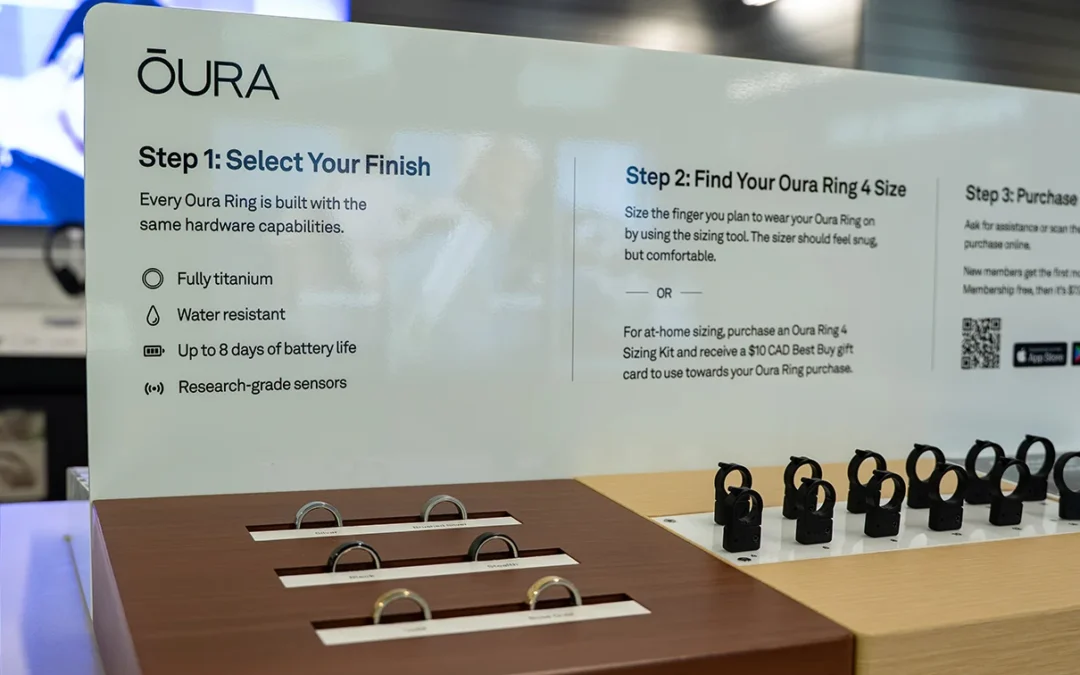
Your Oura Ring’s data still can’t talk to your doctor’s records, and that gap is now its own startup opportunity

Your Oura Ring’s data still can’t talk to your doctor’s records, and that gap is now its own startup opportunity

Clinical interoperability networks move medical records between hospitals seamlessly. Wearable data has no equivalent, and that's a real, unsolved infrastructure gap.

Health systems have spent a decade building infrastructure to move clinical records between hospitals and EHRs. Wearable data generated by the same patients has almost none of that infrastructure, and the gap is becoming impossible to ignore.

Two parallel data worlds that still don't connect

On the clinical side, digital health apps can route through treatment-use-case networks like Health Gorilla, Particle, Zus, and Metriport, accessing patient data via Carequality and Commonwell without requiring the patient to log into a portal or re-verify their identity, according to a detailed analysis of the wearables interoperability landscape.

Wearables have no equivalent network. No provider-mediated system today hands a clinician Whoop or Oura data without the user separately authenticating and manually connecting their account, even though millions of patients are generating exactly the kind of longitudinal biometric data chronic disease programs say they want.

A small number of wellness aggregators have emerged specifically to connect to Fitbits, Ouras, and other devices to standardize sleep, activity, and fitness metrics for clinical use, but per the same analysis, this remains a fragmented, early-stage layer compared to the mature clinical data exchange stack.

Clinical patient data access is Pareto-distributed, integrating the top EHRs alone gets an app access to most patients as a commodity offering, per the same analysis, while wearables aggregation has no comparable shortcut, every device maker's data lives in its own separate silo by default.

CMS is already building programs that assume this gap is closed

CMS's ACCESS model and similar chronic-care programs are explicitly designed around technology-enabled engagement data, the kind wearables generate constantly. But if that data can't flow into the same clinical data infrastructure that already handles lab results, medication lists, and visit notes, it stays siloed in a separate app a clinician has to remember to check, rather than becoming part of the patient's actual clinical record.

That's not a hypothetical problem, it's the exact infrastructure gap sitting underneath every wearable-to-Medicare crossover story happening right now, including WHOOP's own move into CMS's chronic care program.

Whether an existing interoperability player builds the bridge, or a new one wins the gap outright

Watch whether an established player like Particle or Zus extends its clinical network to formally ingest wearable data as a first-class data type, or whether a new, wearable-specific interoperability startup emerges to own this gap the way Particle and Zus own clinical record exchange today. Given how quickly wellness wearables are angling toward clinical relevance, whoever solves this bridge first is solving a problem that's about to get considerably more urgent.

Every health data interoperability startup sounds identical, and that’s becoming a real problem for buyers trying to pick one

Every health data interoperability startup sounds identical, and that’s becoming a real problem for buyers trying to pick one

Particle, Zus, Redox, and Health Gorilla are all pitching "actionable clinical insights" through "innovative solutions." A buyer comparing them can't tell them apart from the homepage alone.

Health data interoperability has matured into a real, fundable market. It has not yet matured into a market where buyers can easily tell competitors apart.

A crowded market speaking one shared, generic language

There are 514 healthcare interoperability solutions startups tracked by Tracxn, with 162 funded and 83 having reached Series A or beyond. Particle Health alone aggregates data from over 320 million patients across 70,000 healthcare organizations, according to the company, competing directly against Zus Health, Redox, Health Gorilla, and 1upHealth, among others, all serving essentially the same core use case: getting clinical data from fragmented sources to the point where it's actually usable.

A detailed positioning analysis of Particle Health's own marketing found its homepage language, "transform medical records into actionable clinical insights", could have any competitor's logo swapped in without changing a word, and noted that phrases like "innovate" belong to nobody in this category anymore because everyone uses them.

The global healthcare interoperability solutions market is estimated at $5.61B in 2026, growing to $9.57B by 2031, real, durable demand sitting underneath a category where most of the marketing language is currently indistinguishable between competitors.

Genericness is a growth ceiling, not just a branding problem

A buyer evaluating Particle, Zus, and Redox side by side isn't choosing based on how "innovative" each one claims to be, they're comparing coverage, data quality, price, and compliance, the practical criteria pragmatist buyers actually use once a category has moved past its earliest adopters. Health data interoperability is squarely in that pragmatist phase now, per the same positioning analysis, TEFCA is live, information-blocking rules have real teeth, and buyers increasingly know what they're shopping for.

That maturity cuts against companies still pitching with innovator-era language. A startup that can't articulate what specifically it does better than the other four names a buyer is also considering is competing purely on relationships and sales effort, a much more expensive way to win than genuine differentiation.

Which company breaks from the shared script first

Watch which interoperability startup moves first to own a specific, defensible claim rather than a shared category description, something closer to "one API, every network" than "actionable insights." The company that successfully claims a specific word or phrase the way "Plaid for healthcare" almost did for Particle, if it weren't borrowed from an unrelated industry, is the one likely to pull ahead of a genuinely crowded field on positioning alone, not just product.