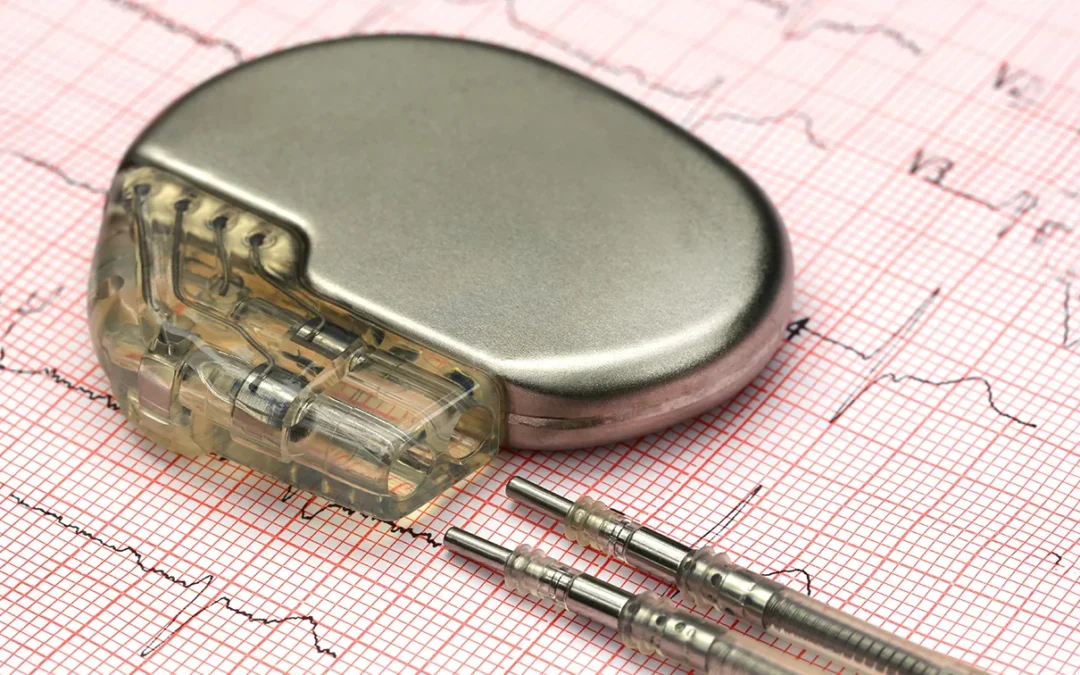
Cardiac monitoring startups are betting on the symptom that hasn’t happened yet

Cardiac monitoring startups are betting on the symptom that hasn’t happened yet

Cardiosense has raised $15.1M to build AI models that flag heart failure risk before a patient notices anything is wrong.

Cardiometabolic care has historically been reactive by design. Patients get diagnosed after a cardiac event, not before one, because the tools available in a standard visit are rarely sensitive enough to catch a warning sign early enough to act on it.

Sensors plus AI, aimed at the moment before symptoms

Cardiosense is building a physiological waveform data platform, combining novel sensors with AI, to develop predictive biomarkers aimed at catching disease before symptoms appear rather than after a patient shows up in crisis. The company's funding to date, including its $15.1 million raised, positions it among a small group of startups treating pre-symptomatic detection as the actual product, not a secondary feature layered onto an existing monitoring tool.

The technical challenge here is not collecting the data. Wearables and remote sensors already do that reasonably well, and have for several years. The harder problem is building models sensitive enough to separate a real pre-symptomatic signal from ordinary biological noise, without generating so many false positives that clinicians stop trusting the alerts entirely.

The most expensive events are the ones no one saw coming

Heart failure readmission is one of the most expensive line items in American healthcare, and almost all of that cost sits downstream of a warning sign that existed but was never caught in time.

Continuous, sensor based monitoring changes what "early" can actually mean in cardiometabolic care. Instead of catching a problem at the next scheduled visit, which might be months away, a model like this is designed to catch it in the days or weeks before an event, while there is still time to intervene.

That predictive framing puts Cardiosense in a similar position to the peptide and metabolic startups discussed elsewhere in this issue, all of them are effectively betting that earlier intervention, whether through prediction or through new treatment mechanisms, is where the next real gains in cardiometabolic outcomes are going to come from.

Validation, not funding size, decides this category

Predictive cardiac monitoring will live or die on clinical validation, not on funding size. The startups worth tracking in this space are the ones publishing outcomes data alongside their raises, not just raise announcements alone, since payers will not reimburse a predictive tool they cannot independently verify against real patient outcomes.

Watch for Cardiosense specifically to publish or partner on a validation study over the next year, since that single data point will matter more to its long term trajectory than any future funding round.


A nurse showing up with a lab kit is now a funded business model

A nurse showing up with a lab kit is now a funded business model

Sprinter Health just raised $32M to send full time nurses into people's homes for blood draws and vitals, and the pitch is not convenience, it is completion.

Health systems have spent years building better screening protocols and better outreach campaigns. Almost none of that investment matters if the patient told to get a blood draw simply never does it, and that gap between "ordered" and "completed" is exactly where Sprinter Health has built its business.

A funded bet on logistics, not information

Sprinter Health closed a $32 million Series B, led by Andreessen Horowitz and Accel, to expand a model built around one specific failure point: patients who are told to complete a lab draw or a check-in visit, and never do. The company sends full time nurses directly into homes to complete the task on the spot, rather than asking the patient to travel to a lab or a clinic.

That distinction matters more than it sounds. A missed lab draw does not show up as a dramatic failure anywhere in a health system's dashboard, it just quietly disappears, and the care plan built around that data point either stalls or proceeds on incomplete information. Sprinter's entire model exists because that quiet failure point turned out to be large enough, and expensive enough downstream, to fund a nine-figure category around fixing it.

Follow through is a different problem than access

Telehealth solved for distance. Sprinter is solving for follow through, which is a genuinely different failure point, and one that shows up specifically in preventive screening and chronic disease monitoring programs where a missed draw quietly kills the whole care plan before it even starts.

The hardest part of most care programs is not diagnosis or treatment, it is getting the patient to actually show up for the appointment that makes either possible, and that is as true of a Medicare wellness visit as it is of the biomarker testing platforms covered elsewhere in this issue.

This also reframes site of care innovation as a completion problem rather than purely an access problem. A patient can have full insurance coverage, a nearby lab, and a clear referral, and still never complete the draw, simply because the logistics of getting there never lined up with their week. Sprinter's model removes that logistics step entirely by moving the service to the patient instead.

Infrastructure or service

The model only works at the density and cost structure Sprinter has built if health systems and payers start treating it as core infrastructure rather than a pilot program layered on top of an existing workflow. Watch whether this raise is used to expand geographic density in existing markets, or to prove the model works as a white label layer other care programs, including some of the preventive screening platforms discussed later in this issue, can plug into directly.

That decision shapes whether Sprinter becomes a category defining platform other companies build on, or a well funded regional service competing market by market. Either path is viable, but they require very different next moves from here.

A nurse showing up with a lab kit is now a funded business model

WHOOP just joined a Medicare payment model, and the line between wellness wearable and medical device is getting harder to find

A $575M raise at a $10.1B valuation came with a new kind of validation: a spot in a ten-year CMS program built for chronic disease management.

WHOOP built its business on athletes and fitness enthusiasts who wanted to optimize sleep and training. Its most recent move suggests the company sees a much bigger opportunity sitting right next to that one.

A wellness wearable enters a Medicare chronic care model

WHOOP closed a $575M Series G round led by Collaborative Fund in March 2026 at a $10.1B valuation, according to Crunchbase. In the same year, WHOOP was selected to participate in CMS's ACCESS model, a ten-year program launching July 5, 2026, designed to support technology-enabled chronic disease management for Medicare beneficiaries with conditions including diabetes, hypertension, and cardiovascular disease. Doctronic, Headspace, and Noom were also selected for the same program.

This is happening even as WHOOP faces real regulatory friction elsewhere: the FDA issued a warning letter over WHOOP's Blood Pressure Insights feature for unauthorized marketing, then escalated to a consumer safety communication, and WHOOP has publicly refused to disable the feature, according to Sacra's company analysis.

WHOOP members log more than 90 additional minutes of exercise per week, over two extra hours of sleep, and 10% higher heart rate variability than non-members, according to the company, precisely the kind of longitudinal behavior data a chronic disease management program is built to use.

Passive data is the actual asset, not the device

Consumer wearables generate passive biometric data streams without requiring any conscious action from the user, which is exactly what makes them attractive to chronic disease management programs looking for low-cost, always-on monitoring tools. That's a fundamentally different value proposition than the fitness-optimization pitch WHOOP built its consumer business on, and it's why a wellness company can plausibly sit inside a Medicare program alongside AI doctor platforms and behavioral health apps.

The regulatory tension isn't incidental to this story, it's the actual friction point. A device the FDA is actively warning about for one clinical claim is simultaneously being invited into a federal chronic care program for a different one, which says as much about how unsettled the wellness-to-medical boundary currently is as it does about WHOOP specifically.

Whether other wellness wearables follow the same regulatory tightrope

Watch whether Oura, which now offers its own blood-testing strategy to match WHOOP's move toward clinical claims, pursues a similar CMS or FDA pathway, or holds back given WHOOP's current regulatory friction. Also watch how the ACCESS model's 2026-27 performance data treats wearable-sourced engagement data compared to more traditional clinical inputs, since that will signal whether CMS sees passive wearable data as genuinely equivalent evidence or a lower-tier supplement.

Sleep tech just proved you don’t need a $10B valuation to be capital efficient

Sleep tech just proved you don’t need a $10B valuation to be capital efficient

Eight Sleep hit free cash flow positive on a fraction of Oura and WHOOP's total raise, and that's a more interesting story than another mega-round.

Sleep and recovery wearables keep pulling in enormous valuations. The more useful story is which of these companies are actually generating cash rather than just capital.

Three very different capital efficiency profiles

Eight Sleep raised a $50M round at a $1.5B valuation in March 2026, its second round in a year, bringing total funding to roughly $310M, according to Crunchbase. The company says it achieved free cash flow positivity in 2025, before this latest raise. Oura, by comparison, has raised $1.25B total, including a $900M Series E at an $11B valuation in October 2025, and reports roughly $1B in 2025 revenue with 5.5 million rings sold and 2 million paying subscribers, according to a widely cited investor analysis. WHOOP has raised comparably less than Oura in total but crossed $1B in annual recurring revenue with what the same analysis describes as record-low churn.

Oura's subscription revenue is only about $110M on a roughly $1B business, meaning the bulk of its revenue still comes from one-time ring sales rather than the recurring subscription model investors typically reward with the highest multiples.

Measurement alone won't justify a $10B valuation forever

Both Oura and WHOOP have proven that consumers will pay to quantify their bodies. Neither has yet proven that measurement alone, without also improving the underlying health outcome, will sustain a valuation in the double-digit billions once growth inevitably slows. One investor analysis put it bluntly: the company that figures out how to actually improve health, not just report on it, wins, and right now that's an open contest, not a settled one.

Eight Sleep's smaller, more capital-efficient path, hitting free cash flow positive well before a $10B valuation became the target, suggests a different route to the same destination: building a defensible, profitable business first, then letting the valuation follow, rather than raising toward a valuation and hoping the business model catches up.

Whether Eight Sleep's FDA pathway matters more than its funding

Watch Eight Sleep's stated plan to seek FDA approval for sleep apnea detection and mitigation, since that would be a genuine crossover from consumer wellness into a regulated clinical claim, the same tightrope WHOOP is currently walking with blood pressure. Whichever of these three companies clears that regulatory bar cleanly first will likely set the template for how sleep and recovery wearables are allowed to talk about health outcomes going forward.

Medtech hardware keeps raising nine-figure rounds. The software layer underneath it is starving for capital by comparison

Medtech hardware keeps raising nine-figure rounds. The software layer underneath it is starving for capital by comparison

Implantable devices captured half of all medtech funding in a year. Device data platforms captured under 5%, and AcuityMD is nearly the only exception.

Medtech investors are clearly willing to write large checks. Where those checks go reveals a lopsided market that's easy to miss if you're only tracking headline deal sizes.

A 50-point capital share gap between hardware and software

Implantable devices and medical devices attracted the most investor attention in medtech, together accounting for 32 of 52 deals and $2.44B raised over a 12-month period through July 2026, according to New Market Pitch.

Implantable devices alone captured $1.58B across 18 deals, a 50.5% capital share against a 34.6% deal share, a capital-to-deal ratio of 1.46 showing outsized check sizes relative to how often deals actually happen in that category. Device Data Platforms, by contrast, remained underrepresented at just 4.8% of capital despite considerable AI enthusiasm across the sector, with AcuityMD, which builds software specifically for medtech commercialization, standing out as nearly the lone well-funded exception.

Connected diabetes and metabolic monitoring companies raised capital too, but at meaningfully smaller check sizes than implantable-platform rounds, suggesting investors see more competition and less defensibility in that specific software-adjacent corner of the market.

Clinical device risk still commands a premium over software risk

The gap suggests medtech investors still price clinical device risk, will this implant work safely in the body, higher than software risk, even in an environment where AI-driven software is attracting enormous enthusiasm in nearly every other healthcare category. AcuityMD's success as almost the sole well-funded device data platform indicates the market is willing to fund medtech-specific software when it improves device adoption or regulatory throughput directly, rather than when it's a general-purpose data or AI layer without a clear tie back to getting a physical device into more hands.

Whether the AI enthusiasm narrative finally shows up in the funding data

Watch whether Device Data Platforms' 4.8% capital share moves meaningfully in coming reporting periods, since a sustained gap between AI enthusiasm and actual medtech software funding would suggest the category's software opportunity is smaller or harder to capture than the broader AI narrative implies, at least until a second AcuityMD-style breakout proves the exception wasn't a one-off.