Tiny Health: Turning an overlooked biomarker into an early warning system for lifelong health

Tiny Health: Turning an overlooked biomarker into an early warning system for lifelong health

More than 40% of US children live with at least one chronic condition, and Tiny Health is targeting the microbiome's most shapeable window, the first 1,000 days of life, when the gut is still forming and roughly 80% of the immune system takes shape.

Tiny Health was founded in 2020 by serial entrepreneur Cheryl Sew Hoy, with co-founder Donald Koo, after her own child's eczema and allergies were traced back to gut imbalances, and she found no infant gut test existed to catch it earlier. That personal origin story is now a company with genuine scientific depth behind it.

Strain-level data, not a genus-level snapshot

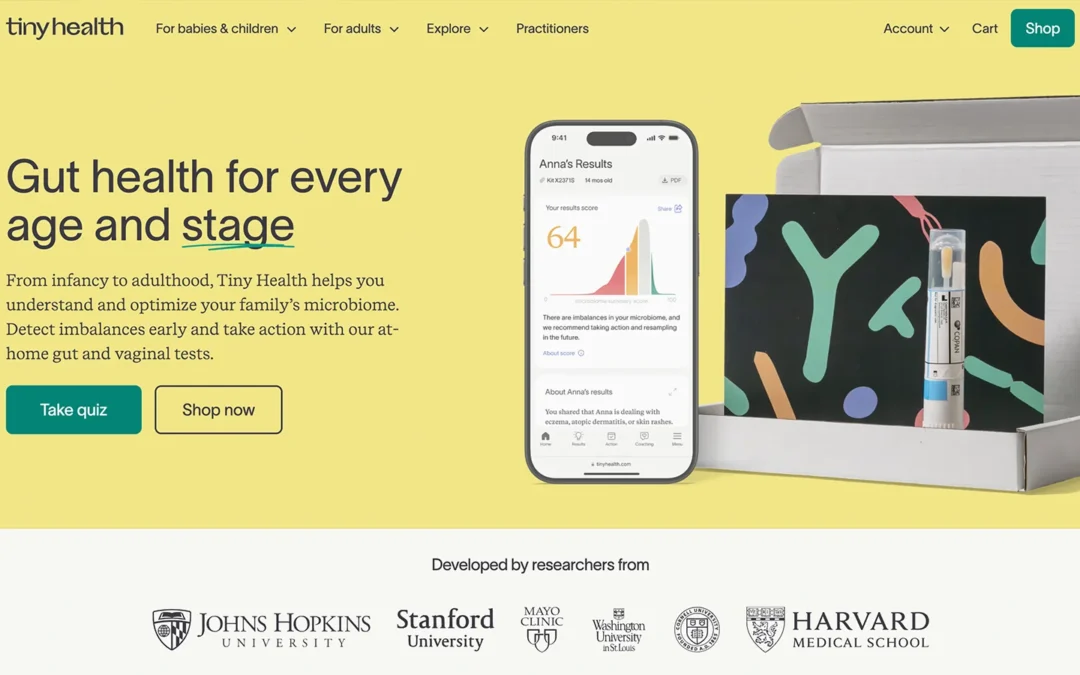
Tiny Health runs shotgun metagenomic sequencing, which reads microbial strains and their functions directly, a materially deeper view than the genus-level snapshot most consumer gut tests offer. The tests span pregnancy, postpartum, infancy, childhood, adult gut, and vaginal health, developed with researchers from Johns Hopkins. The company has tested over 100,000 people in three years and has expanded into the EU, Canada, and Mexico.

76% of infants tested increased beneficial bacteria, and 60% improved symptoms after following Tiny Health's recommendations, real outcomes data behind a consumer-facing test category that rarely publishes any.

A moat that can't be faked in a pitch

Tiny Health is attacking a real crisis at the single moment it's most reversible. The moat here is scientific and genuinely hard to copy: proprietary strain-level data, real clinical rigor, and a research posture that most consumer testing brands never attempt, since it's slower and more expensive than shipping a genus-level test and calling it done. That's precisely the kind of domain depth that takes years to build and can't be replicated by a fast-moving competitor in a single funding cycle.

Turning a biomarker into a category

Tiny Health is effectively trying to turn an overlooked biomarker, the infant and family microbiome, into an early warning system for lifelong health, not just a one-time consumer test. Watch whether the company's international expansion into the EU, Canada, and Mexico brings the same research rigor with it, or whether regulatory and reimbursement differences across those markets force a leaner, less research-heavy version of the product abroad.
Nourish: How founder and clinician posts are out-engaging brand content 8.2 to 1

Nourish: How founder and clinician posts are out-engaging brand content 8.2 to 1

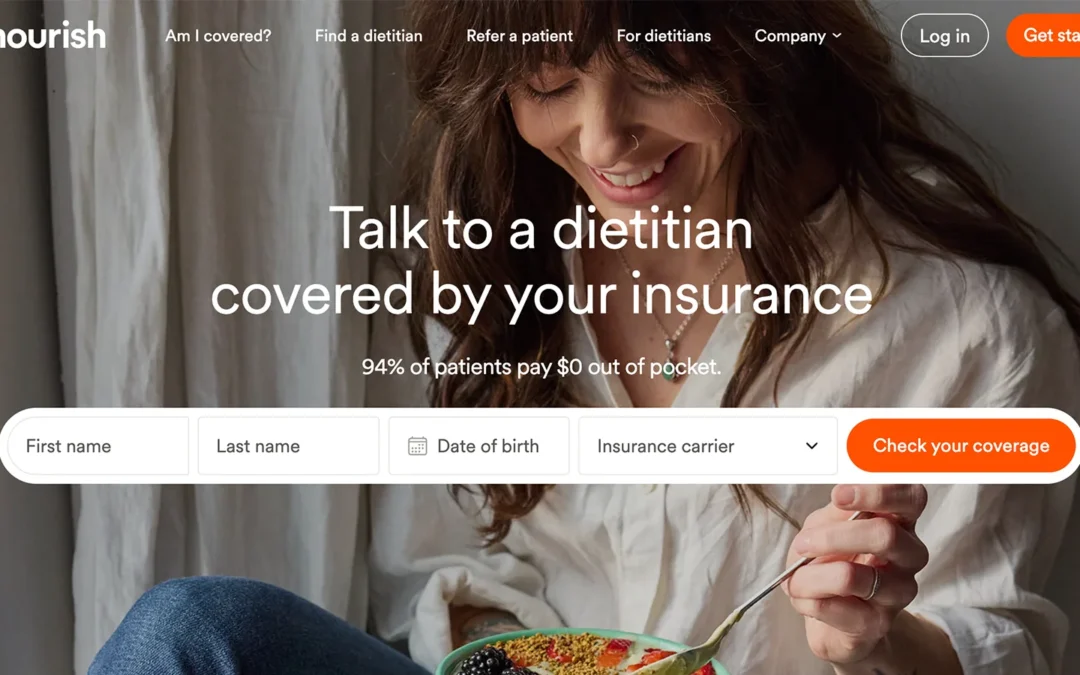
On identical content, posts from Nourish's own dietitians and founders beat brand-page posts by more than eight times, and that gap is reshaping how the company runs its entire content operation.

Nourish, the virtual nutrition startup, has turned a LinkedIn presence into a genuine growth channel, and the data behind that channel is specific enough to be a playbook rather than just a success story.

Person over logo, on a rhythm that holds

Nourish's content mixes four repeatable formats. It launches new offerings, like Nourish Labs, free metabolic testing built into dietitian-led care, framed around what the feature does for patients rather than the feature itself.

It uses registered dietitians sharing their first-week experiences on the platform, which humanizes the brand while quietly doubling as a recruiting tool.

It runs a "clinical reframe" format, dietitian-authored, plain-language myth-busting on nutrition and GLP-1s, which 5W Health Tech found drives 3.4 times the engagement of the same content posted from a brand page.

And it reframes milestone news, unicorn status, 3,000+ dietitians, coverage in all 50 states, as access expanding rather than as a trophy for the company.

Founder and clinician posts out-engage brand pages 8.2 to 1 on identical content, and drive 4.1 times the qualified inbound, according to 5W Health Tech's 2026 analysis.

The content that travels has a person in it

The pattern across every format is the same: content that travels has a human and a specific outcome inside it, not a product screenshot.

Patient stories earn reposts at 2.9 times the baseline rate, and regulatory explainers, ordinarily among the driest content a healthcare company can publish, convert at 8.7%.

That's a strong signal that plain-language authority, not polish, is what actually moves a healthcare audience to act.

The three-part discipline behind the numbers

For any startup planning to be tagged and promoted the way Nourish has been, the transferable lesson has three parts: put dietitians and founders in the byline instead of the brand account, post on a rhythm sustainable for a full year rather than a launch sprint, and lead with the person, not the logo, in every single format.

Watch whether Nourish can hold that discipline as the team scales past 3,000 dietitians, since founder-led content is notoriously hard to sustain once a company outgrows its founding team's bandwidth.

Cofertility: A $0 egg-freezing model built on a rebrand that refuses the category’s defaults

Cofertility: A $0 egg-freezing model built on a rebrand that refuses the category’s defaults

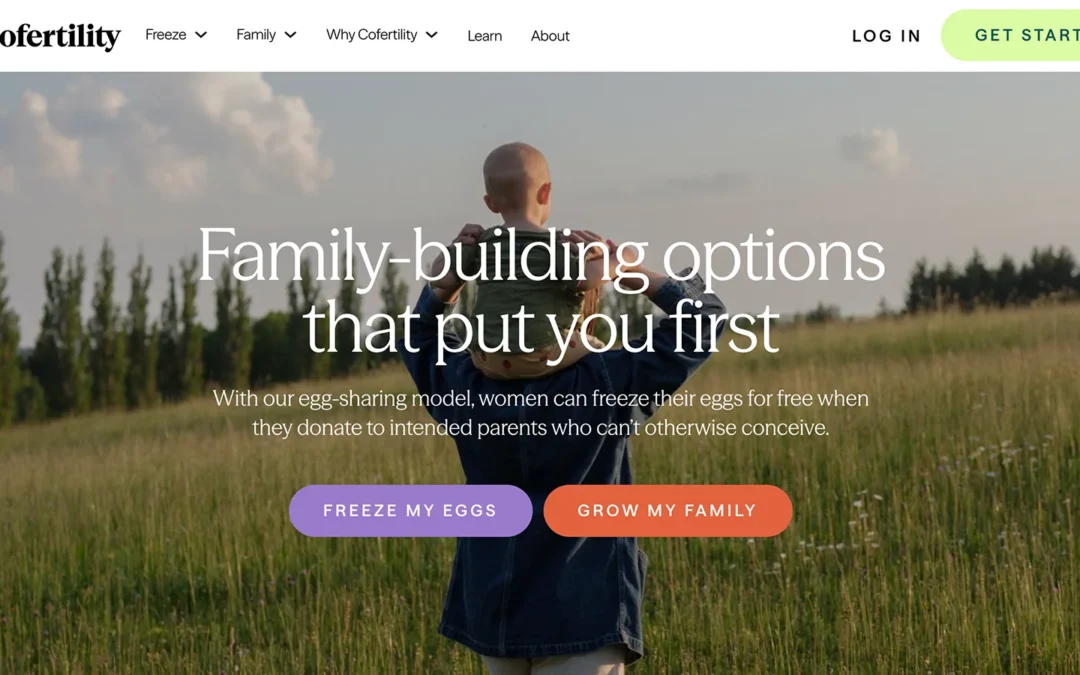
Members freeze their eggs for free when they donate half to a family that can't otherwise conceive, and the late-2025 rebrand behind that model shows why positioning can matter as much as the offer itself.

Fertility branding has a well-worn playbook: urgency, fear, and a palette of clinical blue. Cofertility, a fertility company backed by tennis star Maria Sharapova, built its entire identity by refusing that playbook, and the result is a case study in how naming architecture and visual system can do commercial work that a feature list can't.

A burst icon and an untangled name

In late 2025, Cofertility relaunched its identity around a new "burst" mark, an icon that reads simultaneously as a sunburst, a cell, a snowflake, or a north star depending on the viewer, paired with a rebuilt wordmark using connected letterforms for legibility.

The company also fixed a naming problem that had been quietly confusing customers: "Freeze by Co" became Cofertility Freeze, and "Family by Co" became Cofertility Family, putting the masterbrand first across both of its programs, egg freezing and donor family building.

The palette deliberately separates the two programs while avoiding the clinical blue that dominates fertility branding, and a confetti motif plus non-stock photography replaced the tired imagery of women and babies the category defaults to.

Strategic before visual

The sharpest move here isn't the mark itself, it's the decision to lead with celebration and inclusivity rather than urgency and fear, in a category where nearly every competitor still reaches for the same clinical, anxiety-driven register. Fixing the naming confusion between "Freeze by Co" and "Family by Co" also removed a real, measurable customer problem, a reminder that what a company calls its products can matter as much as its logo, and that brand architecture is a functional decision, not just an aesthetic one.

A system built to absorb what comes next

The flexible system Cofertility has built, separating programs by palette while unifying them under one masterbrand, is designed to absorb future services without another identity overhaul. Watch whether the company adds a third program under the same "Cofertility [Name]" convention, since that would be the clearest sign the naming fix was built for scale, not just for the two programs it currently has.