
Oshi Health: Proving a “hard” specialty can go fully virtual
GI care was long considered un-virtualizable, and Oshi Health's multidisciplinary, in-network model is the clearest counter-example currently operating at national scale.
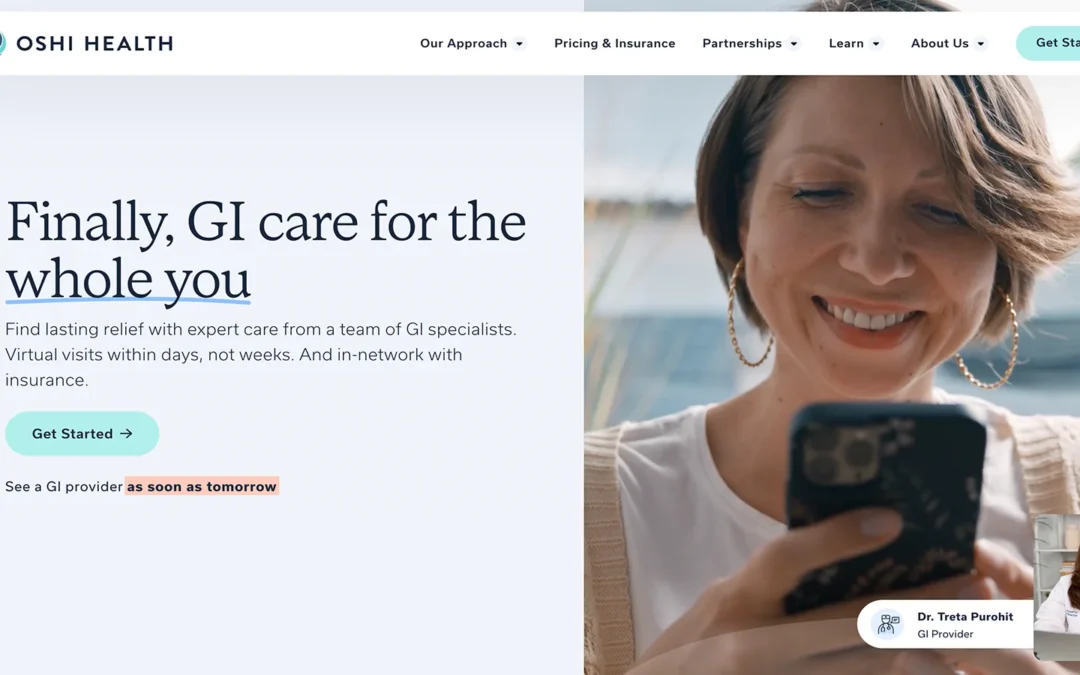
Oshi Health is a virtual GI clinic delivering multidisciplinary digestive care in-network, nationwide. Gastroenterology has historically sat near the bottom of the list of specialties anyone expected to go virtual, since so much of the category's traditional workflow assumes procedures and in-person exams. Oshi's entire premise is a direct challenge to that assumption, and the fact that it's operating at national, in-network scale rather than a narrow regional pilot is the more interesting data point.
Multidisciplinary, not just a single specialist
Rather than offering only a GI physician or only a dietitian, Oshi combines both alongside behavioral health support in one coordinated virtual care team, which mirrors how digestive conditions are actually treated in the best in-person settings. Chronic GI conditions are notoriously multifactorial, diet, stress, gut-brain interaction, and medication management all interact, which is why fragmented, single-specialist care so often underperforms even when each provider is individually excellent.
By building coordination into the platform itself, Oshi replicates the structural advantage of an integrated academic GI center without requiring the patient to live near one.
GI has historically been treated as a "hands-on" specialty requiring procedures and in-person exams, making Oshi's fully virtual, in-network model a genuine proof point rather than a marginal convenience play.
Lower total cost, not just lower friction
The claim that matters most here isn't convenience, it's total cost of care. Delivering coordinated GI care remotely, at lower total cost than the fragmented specialist path most patients currently take, is the kind of ROI story payers actually respond to. Uncoordinated GI care tends to generate a predictable, expensive pattern: repeated ER visits for flare-ups, redundant testing, and delayed diagnosis. A platform that can demonstrably interrupt that pattern has a genuinely differentiated pitch to the payers who decide whether a specialty like this scales nationally.
Whether other "un-virtualizable" specialties follow
Watch whether Oshi's model gets replicated in other specialties long assumed to require in-person care, since a successful GI precedent lowers the perceived risk for payers evaluating the next specialty to virtualize. Every specialty that proves a fully virtual, multidisciplinary model at scale makes it structurally easier for the next one to raise capital and sign payer contracts. Rheumatology and endocrinology, with similarly multifactorial, chronic-management profiles, are the most plausible next candidates, and Oshi's continued in-network expansion will be one of the clearest signals of whether payers are actually convinced by the total-cost argument.

