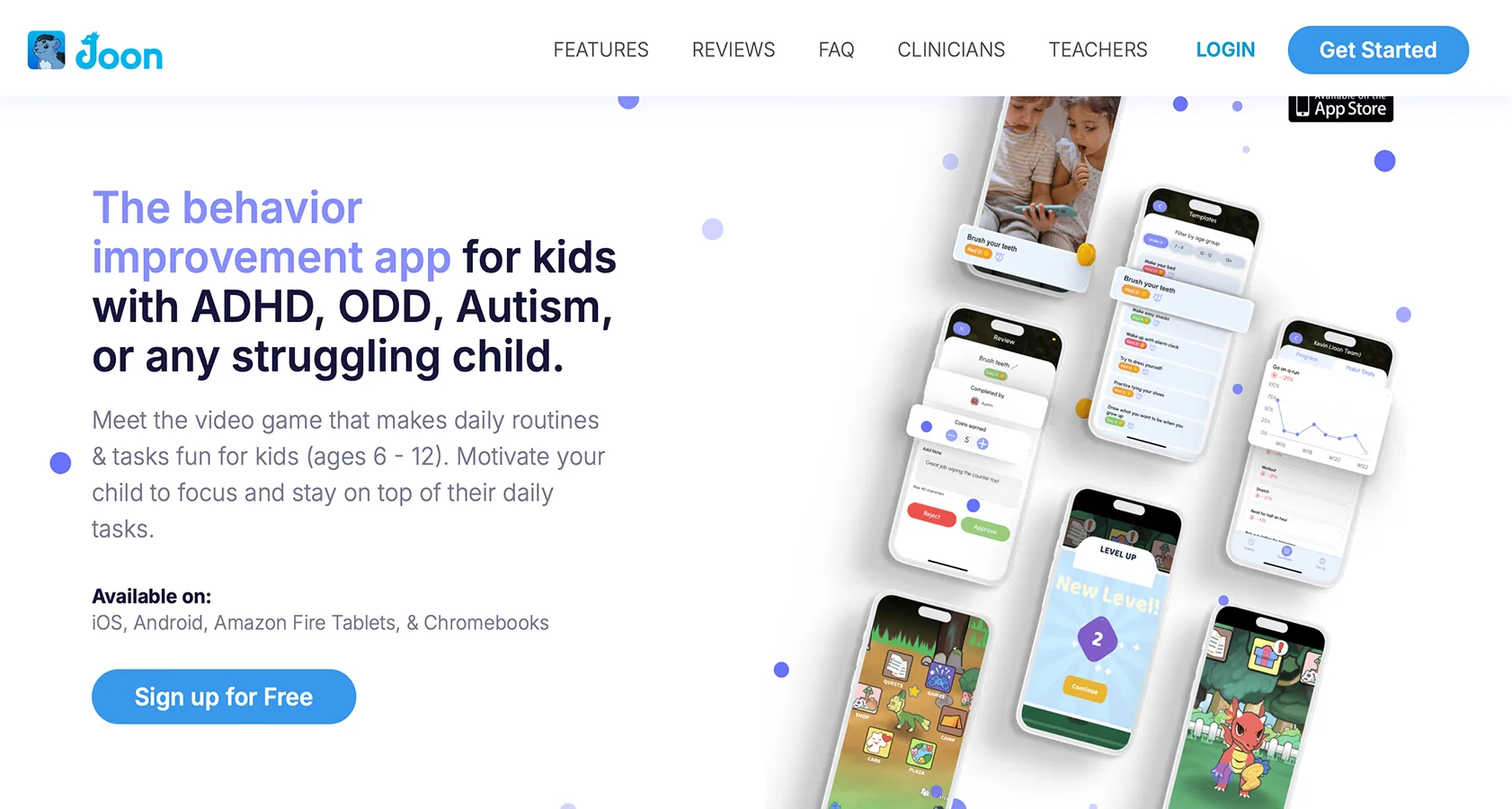
Built by a founder who has ADHD and grew up gaming, Joon has passed a million users by making a digital therapeutic feel like a video game rather than a chore chart.
Joon is a game-based digital therapeutic for children aged 6 to 12 with ADHD, autism, anxiety, and depression. Most tools built for this age group and diagnosis mix are designed by clinicians first and made kid-friendly second, which is part of why so many struggle with sustained engagement past the first few weeks. Joon inverts that order, and the retention numbers suggest that ordering matters more than it's usually given credit for.
Virtual pets that level up on real-world proof
Kids care for virtual pets that only level up once they complete real-world "quests," from brushing teeth to homework, all set and tracked by parents and clinicians through the app. The mechanic works because the reward loop lives entirely inside the game world, while the actual behavior change happens in the physical world. Parents and clinicians set the specific quests and thresholds on the backend, so the app can be tailored to a child's treatment goals without the child ever feeling clinically managed.
Joon has passed a million users and tens of thousands of paying families, a scale most pediatric digital therapeutics never reach.
Adherence solved through motivation, not reminders
Most pediatric behavior tools rely on reminders and nagging, which is exactly what a child with ADHD tunes out fastest, and often what strains the parent-child relationship over time, casting the parent as enforcer rather than collaborator. Joon flips the mechanic: motivation comes from the game itself, which is likely why it's reached paying-family scale that adherence-dependent categories usually struggle with. It also gives clinicians a more objective way to track whether an intervention is working, since quest-completion data replaces asking a parent "did you manage to get them to do it."
Whether clinical partnerships follow consumer scale
Watch whether Joon's million-user consumer base translates into formal clinical or school partnerships, since that's usually the next step once a pediatric digital therapeutic proves consumer demand at this scale. A company with proven engagement and paying-family conversion in a notoriously hard-to-retain category is well positioned to pitch schools, pediatric practices, and even payers on its engagement data as a proxy for adherence. Whether Joon pursues that path itself, or becomes an acquisition target for a larger pediatric behavioral health platform, is the more interesting question over the next year or two.