At-home blood testing has split into two categories, and most startups don’t realise which one they’re actually in

At-home blood testing has split into two categories, and most startups don’t realise which one they’re actually in

"At-home testing" isn't one market, and confusing the two is a positioning mistake that shows up at fundraising time.

At-home blood testing looks like a single category from the outside. Once you separate the companies by what they actually own, it's clearly two different businesses wearing the same label.

Three layers, not one market

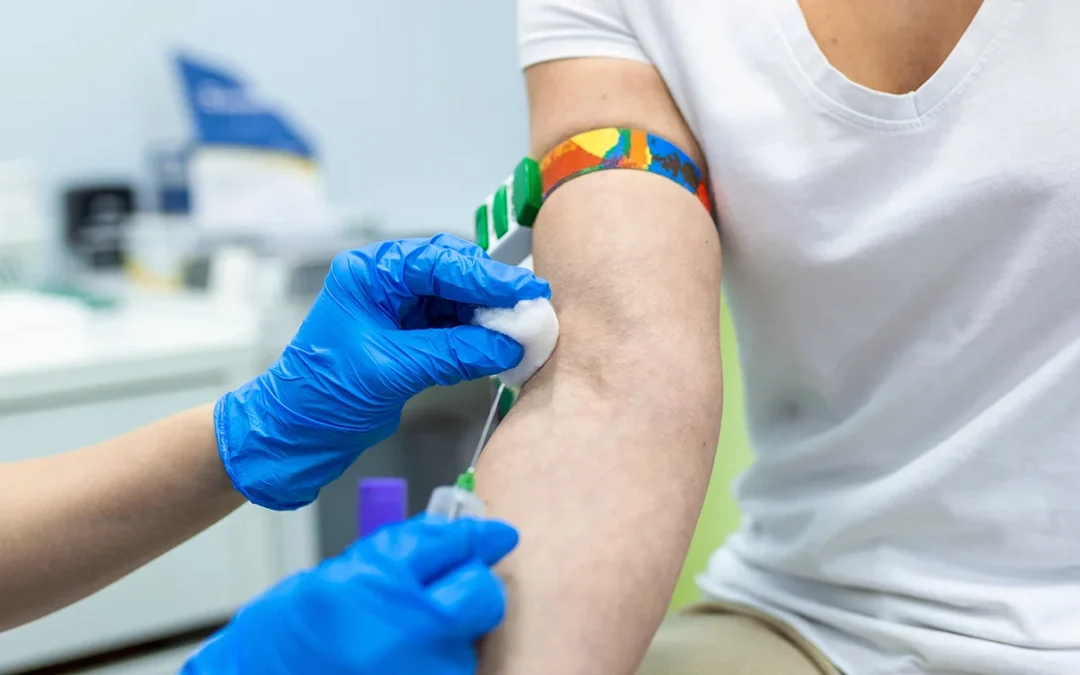
The at-home blood test category has split cleanly into three layers. LetsGetChecked (roughly $263-285M raised, depending on the source) and SiPhox (an estimated $32-35M) own the consumer testing relationship directly, marketing to and billing the end patient themselves.

Tasso and Sprinter Health provide collection infrastructure, the logistics of getting a sample drawn at home, without owning that consumer relationship at all. Getlabs, a collection-logistics player, was acquired by Function Health, folding that layer into a bundled membership platform rather than continuing as a standalone company.

Companies requiring a clinic visit or imaging, Neko Health, Prenuvo, Fountain Life, sit in the broader preventive-health market rather than this narrower at-home race, discussed in the previous article, since the customer decision they're competing for is fundamentally different: a scheduled visit rather than a kit that arrives in the mail.

The exit path depends on the layer

Getlabs' acquisition by Function shows collection infrastructure is becoming a feature that bundled platforms buy, not a category that competes with them.

A startup pitching "at-home testing" needs to be precise about which of these three layers it actually occupies, since the competitive set, the fundraising comparables, and the realistic exit path differ sharply between them.

A consumer-relationship company like LetsGetChecked is building toward a very different outcome than a collection-infrastructure company like Tasso, even though both would describe themselves the same way in a one-line pitch to an investor unfamiliar with the category's internal structure.

The acquisition pattern to track

Watch for more collection-infrastructure startups getting quietly folded into bundled platforms the way Getlabs was, rather than raising further as standalone companies.

That consolidation pattern is a much stronger signal about where the category's real value sits than any individual funding round announcement, and it suggests the consumer-relationship layer, not the logistics layer, is where the durable value in this category is accumulating.


Digital health’s exit map in 2026: M&A dominates, and Big Tech is now a buyer

Digital health’s exit map in 2026: M&A dominates, and Big Tech is now a buyer

The IPO window is barely open, so acquisitions are doing almost all the work, and the acquirer list has some genuinely new names on it.

Exits are the clearest read on what a digital health startup is actually worth once the venture money runs out, and 2026's exit data shows the buyer pool widening in a direction few founders were planning for two years ago.

A buyer list that no longer looks like healthcare

Of 282 recent digital health exits, 268, or 95%, were acquisitions rather than IPOs, according to Galen Growth.

In February 2026, Hims & Hers agreed to acquire Australian telehealth company Eucalyptus for up to $1.15B, including $240M upfront cash, to expand into new international markets. In March, Universal Health Services agreed to acquire Talkspace for around $835M.

OpenAI acqui-hired Torch, a four-person health records startup founded by the team behind the shuttered primary care startup Forward, for roughly $100M in equity, to support its ChatGPT Health product. Roche acquired pathology AI platform PathAI for $1.05B. In Europe, Kaia Health sold for $285M and Gleamer for $266.9M, both on the strength of built-up clinical evidence and regulatory clearance. The quarter's single IPO was Generate Biomedicines, which raised $400M.

These exits sit against a much larger biopharma and medtech M&A backdrop, where deal value overall reached roughly $96B across 80 deals in H1 2026, $55.1B of that in Q2 alone, according to JPMorgan, giving a sense of the scale of capital moving through healthcare dealmaking generally this year.

The strategic buyer list just got longer

Big Tech and consumer telehealth platforms are now active acquirers of healthcare startups, not just health systems and pharma companies. That widens the realistic exit universe for founders building AI-native health tools or international consumer telehealth brands, categories that didn't have an obvious strategic buyer a few years ago.

OpenAI's Torch acqui-hire valued a four-person team at roughly $25M per head, a striking number on what specialised AI talent is worth to a buyer building a health product from scratch.

It also means the "who might acquire us" list every founder should be building now looks meaningfully different than it did in 2023, and probably includes at least one name outside traditional healthcare entirely.

The governance question Roche just created

Watch whether other large technology companies follow OpenAI's acqui-hire playbook for small, specialised health AI teams, since that is a much faster path to market than building in-house.

Also watch how Roche's ten pharma partners on PathAI, including Gilead, MSD, Novo Nordisk and GSK, respond now that a previously neutral platform is an owned Roche asset, since that governance question could reshape how startups pitch "neutral" AI infrastructure to competing partners going forward. A platform that markets itself as neutral infrastructure to multiple competitors is making an implicit promise, and Roche's move just tested what happens when that promise breaks.

Telepsychiatry is quietly the biggest funding story in telemedicine, and it’s really a one-company story

Telepsychiatry is quietly the biggest funding story in telemedicine, and it’s really a one-company story

Headline telemedicine funding numbers are mostly one specialist platform, and that concentration says a lot about where the category's thesis actually lives now.

Telemedicine funding looks broad from the outside. Break down where the money actually went this year and it collapses into a much narrower, specialty-specific story.

One platform, over a quarter of the category

In pure-play telemedicine funding between August 2025 and July 2026, the top 3 deals accounted for 52.59% of all disclosed capital, and Talkiatry alone represented 26.94% of that total, according to New Market Pitch.

Telemedicine has stopped being a standalone investment thesis and become a delivery layer attached to a specific specialty shortage.

Only one qualifying deal in the entire period went to a generic video-consultation platform; nearly everything else clustered around specialist telehealth, telepsychiatry, and infrastructure attached to a specific clinical supply problem, such as psychiatry, pediatrics, women's health, neurology or cardiometabolic care.

That concentration mirrors the pattern already showing up in behavioral health telehealth claims data, discussed in the final article of this issue, where one specialty dominates usage by a wide margin over every other category, suggesting funding is following utilisation rather than the other way around.

Generic telehealth stopped being fundable

A startup pitching generic "telehealth" today is competing for the one slice of the market investors have effectively stopped funding.

The money has moved decisively toward companies solving a specific clinical supply problem through virtual delivery, not companies offering virtual delivery as the product itself, and that distinction is easy to miss in a one-line pitch that still says "telehealth platform" without specifying which shortage it actually solves.

Who tries to repeat Talkiatry's playbook

Watch which other single-specialty telehealth platforms attempt to replicate Talkiatry's concentration in a different clinical shortage area next, whether that's a physician specialty with long wait times or a population currently underserved by in-person care.

That replication pattern, more than any new generic telehealth entrant, is where the next big funding story in this category is likely to come from, and pediatrics, neurology and cardiometabolic care, the categories the New Market Pitch data flags as the other clusters attracting specialist rounds, are the most likely candidates to watch first.

Function Health hit a $2.5B valuation, and the preventive testing market is now a bundling war

Function Health hit a $2.5B valuation, and the preventive testing market is now a bundling war

Rivals specialise in one layer of preventive testing; Function is betting the bundle wins outright.

The preventive health and longevity testing category has split into two clear strategies this year, and the funding data shows both are being rewarded, just not the middle ground between them.

Bundlers versus specialists

Function Health reached a $2.5B valuation in November 2025 after raising $298M, then closed a further $450M from General Catalyst. It combines labs, imaging, at-home draws and supplement guidance into one membership.

Rivals specialise instead: Prenuvo has leaned entirely on whole-body MRI, generating roughly $250M in annual revenue off $192M raised; Superpower raised $30M at a $300M-plus valuation using partner labs rather than owning testing infrastructure; Neko Health, co-founded by Spotify's Daniel Ek, closed a $700M Series C at nearly $7B in July 2026 to build its own scanning hardware ahead of a US launch.

Neko reports that three out of four returning members who had a serious condition flagged are now healthy or have that condition under control, and that five of seven key biomarkers tracked improved significantly between a member's first and second scan, real outcomes data behind a company still operating on a cash-pay model at roughly £299 per visit, with no insurance option yet.

A genuine strategy fork, not a spectrum

Function Health alone represents 46.2% of all capital raised across 21 biomarker-testing companies over the past year.

This is a real strategy fork for founders in the category: bundle everything into one membership, or own a single layer, imaging, labs, or software, better than anyone else. Both approaches are getting funded at scale this year.

A company trying to do a bit of both, without fully committing to either, is the position least likely to attract a comparable check, echoing the same barbell pattern showing up in digital health funding more broadly this half, discussed in the first article of this issue.

The direct collision coming

Watch Neko Health's US launch land directly against Function's bundled model, since both are now targeting the same subscription-paying customer with opposite theses about what that customer actually wants: one all-in-one membership, or one thing done exceptionally well.

Whichever company wins that specific comparison is likely to set the playbook the rest of the category follows for the next funding cycle, and Quest and Labcorp's potential move into sensor-based screening, should either bring lab and insurance scale to the category, would change the competitive picture again.

Peptide startups are raising ahead of the rules that will govern them

Peptide startups are raising ahead of the rules that will govern them

Capital is already moving into peptide therapeutics faster than the regulatory framework meant to govern the category.

A wave of early-stage peptide startups closed rounds in 2026 well ahead of new FDA guidance that could reshape what they are actually allowed to sell once it lands.

Capital ahead of clarity

Superpower ($30M), Protocole ($6M) and Feel Peptides ($3M) all closed early capitalisation rounds ahead of the FDA's peptide reclassification guidance, expected in late July 2026, according to Rock Health's H1 2026 recap.

This activity is closely adjacent to, and partly driven by, the broader GLP-1 infrastructure buildout described in the previous article, with pharmaceutical manufacturers increasingly bypassing traditional distribution to partner directly with digital platforms for consumer access to metabolic and peptide therapeutics.

The three rounds span a wide range of sizes, from $3M to $30M, a tenfold difference that suggests investors are placing multiple smaller bets across the category rather than concentrating around a single presumed winner the way they have in adjacent metabolic categories like weight management.

This year's capital could get stranded

Investors are moving into wellness, longevity and experimental peptide formulations well ahead of regulatory clarity, a pattern that has played out before in other fast-moving digital health categories, including early telehealth and early digital therapeutics.

Capital moving faster than regulation carries real risk. If the FDA lands on a stricter reclassification framework than these startups are currently built around, some of this year's early capital could get stranded, forcing rapid pivots in product and go-to-market for companies that raised on the assumption of a more permissive outcome.

The spread of round sizes across the three companies may reflect investors hedging against exactly this uncertainty, spreading smaller bets across the category rather than betting big on any single player before the rules are known.

The guidance that decides who pivots

Track the FDA's actual reclassification guidance against what these startups are currently building and selling.

A permissive outcome likely accelerates the category fast; a stricter one could force product pivots within a single funding cycle, and it's worth watching which of these three companies has built enough flexibility into its model to absorb either outcome without a full strategic reset.